
choice
how is ableism still so rife in the experience of yoga?

held is a monthly newsletter centred around yoga + movement, and introspection + feeling. blending embodied practice with therapeutic self-exploration, we dive into different themes, ideas and respond to the world around us.
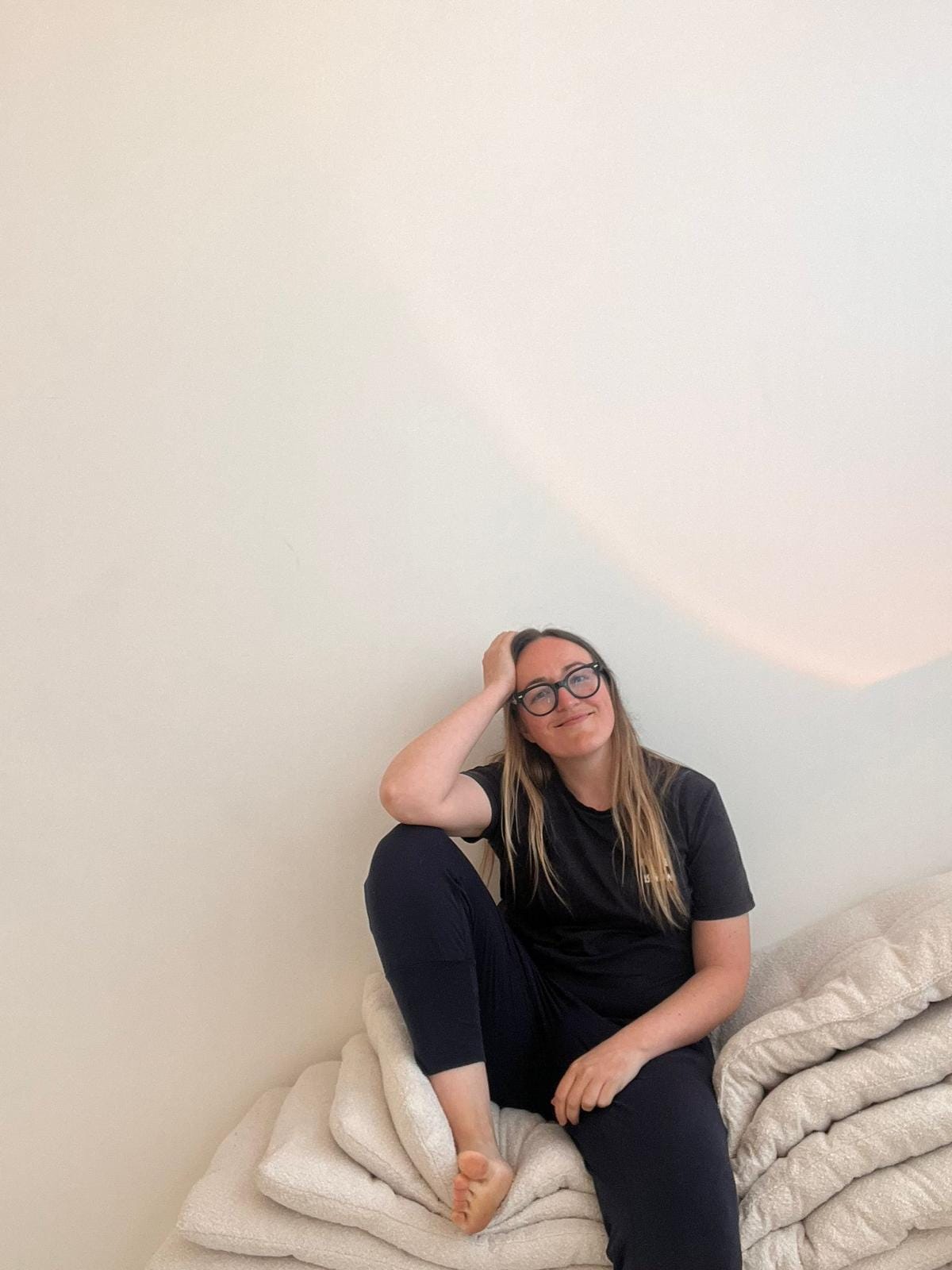


choice, movement, ableism
I’ve always felt a tension between discipline and choice in movement practice. In my younger years, I was drawn to something like yoga because it had a set rhythm, poses and to a certain extent; rules. I liked that at that time, there was a right way or a wrong way to do something and that when you got something ‘right’ it created a sense of validation and achievement. It definitely tapped into my early 20’s brain of wanting to please, achieve, get things right. If I couldn’t do something, then it was for me to find a way to improve, or it was my body that needed adjusting, to be more flexible, to do more to be better.
This is, I realise, a truly ableist experience. I am a person without a disability, in a body that ~ although not small enough for the wild noughties heroine chic ~ was still small enough to be deemed in these spaces. The practice was designed to tap into something within a body like mine, to be exclusionary in design and experience.
Along with this, maybe it’s the recent proposed welfare cuts in the UK and Trump’s ‘big, beautiful bill’ that also add to the hum in the back of my mind as we watch in real time cuts to benefits that support people with disabilities to live with dignity and fuller lives. Full ableism in action. Combined with the rise in #SkinnyTok (a hashtag that has surpassed 2.4 billion views on TikTok), the conservative right shift that has said goodbye to body positivity and hello to thinspiration; it’s a lot to be in a body at the moment. As Ellen Atlanta writes for Dazed; ‘when multiple data points all move in the same retrograde direction, it’s more than a passing trend: it’s a regime shift’.1
As I began learning to teach yoga, I became aware in my teaching that choice, options, possibilities and considering body shape and what it can do, was a key driver in what I wanted to do in my teaching. Working with people in eating disorder recovery and seeing family navigate disability means that the body is always in conversation and the restrictions of movement practice in a traditional sense, are always on my mind.
I also believe choice and possibility in yoga practice keeps it interesting for the teacher, and the students, regardless of physical or mental needs. I think it allows strength and skill and pizazz to be something we are all able to find and explore which feels pretty rad to facilitate as a teacher.
I like the way Charlotte Cooper, author of ‘Fat Body Work: Somatics, Curiosity, Care and Practice’ describes body work to mean “deliberate actions, usually movement, made to have some effect on your body-mind”.2 I like the word deliberate, I like what that means for a teacher in what they create and build for those practicing with them. I like how active it is, the focus on considering needs not just for those in the room or virtual space, but for those outside of it. The people who need to see and know this exists, to hear about it, to know there is a place where they can just be, and not need to do the mental gymnastics needed when the thinking is not done already.
And if I get going on psychological safety and what this means in relation to ableism and fatphobia, we’ll be here all day so I’ll perhaps leave for another time. Because we have to stop saying we are making things psychologically safe if we aren’t thinking consciously about the unconscious constraints, rules, expectations, hierarchy that can exist in movement practice.
Johanna Hedva, author of ‘How to Tell When We Will Die: On Pain, Disability and Doom’, writes expertly and meaningfully about healthcare and systems; and I was particularly moved by how they discuss the collective experience of pain;
“Illness is not—despite The World telling you it is—only a personal, individual experience of pain, trauma, and limitation. It happens inside your individual body, and yet it is an index of the social body. It’s the collision of a lawless body against a body of laws, your world being crashed into by The World. It produces an embodied experience that undoes who you think you are to such an extent that telling other people how it feels seems impossible, and at the same time, it produces a body that is read and deciphered in terms that are historical, systemic, and political. However, the social vector is usually ignored, so that illness becomes an index of one’s own individual powerlessness rather than being seen as the experience of how we are all enmeshed within systems of power, how we are all interdependent, for better or worse, and how such enmeshment and interdependence shapes consequences and potentials, desires and rights, dreams and deaths, worlds and realities.”
This idea of collectivism, of being together, of doing these shifts together, feels not only possible but also… enlivening? As Angela Davis said, “radical simply means ‘grasping things at the root’”3, making the big and overwhelming feel actionable when we all take hold and pull together.
Deborah Levy wrote “She was not a poet. She was a poem”4 and I think of this when I think of what it means to create possibility for all in a yoga practice. To become a poem, the words unfolding as the practice takes place, discovering and creating as you go.
What a gift it is to be a teacher and what a privilege it is to be amongst all bodies.

playing with shapes and props
Props were ~ early into my yoga practice ~ mostly unused. I was embarrassed to need something to aid me when I should be able to simply do it. Suffice to say, I am a big fan of a prop in my older, moderately wiser years and I love using them in a practice to create more options and possibilities and to aid ~ because aiding is good.
Let’s have a play together with some props, some shapes and see what we can create ~ see what works for you and maybe they can go on to evolve and become something new in your practice.

noticing the stories we tell ourselves
We have the capacity to tell ourselves lots of stories about the perceptions and beliefs we hold of who we are and this can particularly noisy when the external world is shouting things at us.
When it comes to our bodies and what is possible, what they can do, and what we need; we can sometimes lean into punishing and punitive language and views.
This introspective practice is centred on noticing what your body can do, what is possible, what might get in the way (mentally, physically, systemically) and what you need from others. It will focus on giving you a sense of control and agency in knowing yourself and allow you to explore and discover awe and have compassion in the body and all it’s complexities.

our two monthly practices
This month, we will play with this idea of choice and agency with a focus on props and play to give space for exploration and sense making your own body and mind’s needs. We will have:
a seated meditation for 20 minutes on Friday 1st August in the morning at 10:00 am BST
a restorative practice for 30 minutes on Sunday 3rd August in the evening at 7:00 pm BST
For the movement practice you will want some props handy like blocks (or big sturdy books), a bolster (or a few pillows/cushions) and a blanket (any type will do, you may even want two).
These practices are a part of your paid subscription and you’ll get a Zoom link to each practice later this month to access the live practices, as well as the recordings and materials afterwards to access in your own time.
If you want to join, why not do a paid subscription trial and see what they’re like, as well as revisiting the back catalogue of recorded practices that you can dive right into.
passing things on…
A few brilliant do, read, see’s worth checking out:
To do…
Add your reflections and experiences to the Accessible Yoga Survey 2025, developed by Accessible Yoga, which will help shape what they do but also the insights will be shared broadly which no doubt help all those who practice and teach yoga
~
To read…
Rachel Charlton-Dailey, author of ‘Ramping Up Rights: An Unfinished History of British Disability Activism’, writes for Glamour about disabled rights and what it means to ramp up the activism
I mentioned Charlotte Cooper earlier and her book ‘Fat Body Work: Somatics, Curiosity, Care and Practice’ and you can read an excerpt here (warning: you will want to buy it afterwards, almost guaranteed)
~
To see…
The V+A has an exhibition dedicated to design and disability, showcasing the radical contributions of Disabled, Deaf, and neurodivergent people and communities to design history and contemporary culture, from the 1940s to now. On until February 2026.
~
Brilliant people doing brilliant work in body inclusion and accessibility in yoga:
Lucy B Yoga (she/her) is a wonder and for teachers, her CPD for inclusive practice is really brilliant if you want increase your knowledge and skill in bringing this into your teaching and her retreats look gorge
Scottee, founder of wonkee, whose videos on yoga, movement, bigger bodies, madder brains is brilliant and their workshops look chefs kiss
Olive (they/them) is a badass movement and yoga teacher whose conversations about the body and dysmorphia and ED recovery are a really important and meaningful conversation in this world
Christy Calahan (she/her) of sizeinclusiveyoga, whose short videos on what to look out for in a teacher and what you can do in your own practice, are fantastic
Jivana Hayman (he/him) founder of Accessible Yoga, has some brilliant books and resources on accessible yoga in particular chair yoga practices which are super
Rodrigo Souza (he/him), a yoga teacher with direct personal experience with traumatic injury and who delivers and trains teachers in adaptive yoga and whose videos and insights are golden
Who else do you love doing great work in this space? Add below to the 🧵
thank you for reading held ~ it means the world. this post is free. if you know people who might enjoy this month’s edition or previous reads, please do share ~ thank you.
Fat Body Work: Somatics, Curiosity, Care and Practice ~ Charlotte Cooper, excerpt
Women, Culture and Politics ~ Angela Davis
Swimming Home ~ Deborah Levy ~ Guardian review